Seven Names, One Gate
Free in full this week and next. From Issue 3, the top stays free and the book goes behind the paywall.
We said on Sunday that Crosscurrents was getting a schedule. This is it.
Every Friday after the close, this piece. The book as it stands, what moved, where every stop sits, and what would have to happen next week for a name to leave. Any day a name enters, exits, or hits its stop, a short trade note goes out the same day. The first two issues are free top to bottom. After that, the framing and the week stay free, and positions, entries, stops and sizing are for paid subscribers, where they belong.
The Q4 offer. Through Sunday, October 11 at midnight ET, both annual plans are roughly a quarter off, and the rate you join at stays yours for as long as you stay.
Research Only: $375 for the year. The Beacon, The Beam, The Horizon and The Chartbook, plus every Crosscurrents issue with a note on each entry and exit.
Complete: $555 for the year. Everything in Research Only, plus Pharos, the terminal where the book and every board behind the research update each morning.
Nine days left on the Q4 window.
Don't navigate in the dark. Join the Watch.
One housekeeping line before the rules. The tracked record started at Thursday's open, October 1. Everything before that is backtest, and we will keep saying so. The board on Pharos carries both, labeled, and this piece will only ever quote the tracked number once there is one.
How the book works
Crosscurrents runs on rules, and we keep an allowance to use our own judgment on top. Seven names at most, benchmark the S&P 500. By rule the book trades ETFs and bitcoin: a name gets in only through a trend gate, and it leaves on a stop, evaluated on the close and sold at the next open. No averaging down. The regime read sets how much of the book is invested, and what it leaves over sits in cash, which is a position. The single stocks in the book are the allowance at work, each behind a stop like everything else. That is the rulebook. The rest is what the names do.
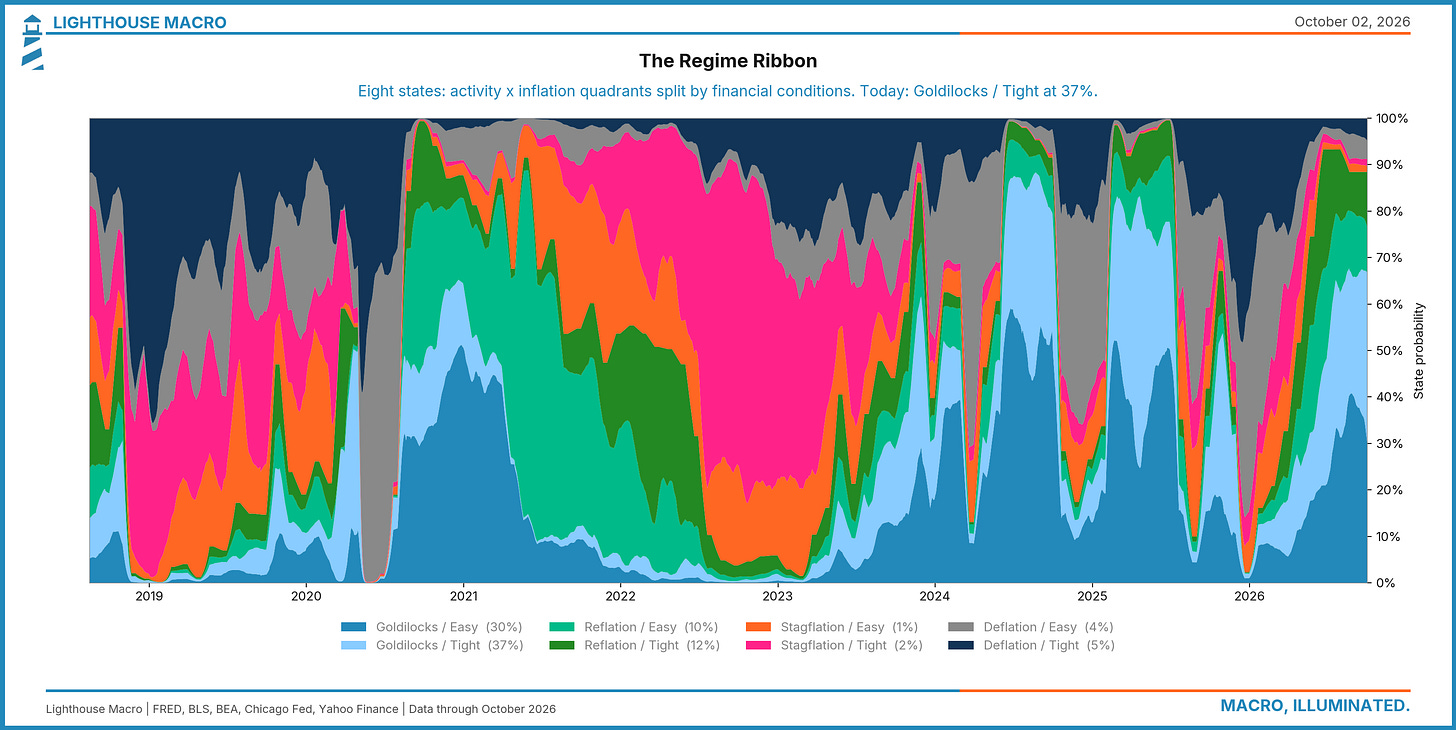
The Regime Ribbon: the growth-and-inflation quadrant, split by financial conditions. It tilts the ranking and sets how much of the book is invested.
The week
The S&P 500 finished the week roughly where it started. Underneath it, the labor market did not.
September payrolls came in at 29,000 against roughly 90,000 expected, and the unemployment rate ticked up to 4.2%. August was cut to 133,000 and July was revised to a loss. Average hourly earnings rose 0.1% on the month and 3.0% on the year. The Bureau of Labor Statistics will note a late Labor Day and seasonal noise, and some of that is real. Three straight months of downward revisions is not noise. It is the labor side of the ledger we have been writing about since the spring, now in the headline number.
Rates did not blink. The 10-year finished near 5.28%, up about four basis points on the day, at levels it last saw in 2002, two weeks after the first hike of a new cycle. The market is being asked to price slower hiring and a tighter Fed in the same breath.
That is the crosscurrent, and the book is built for it. We do not hold the index. We hold what the index is being led by, across four sleeves, and the stops decide when that changes. This week the leadership was semiconductors and energy. The index went nowhere. They did not.
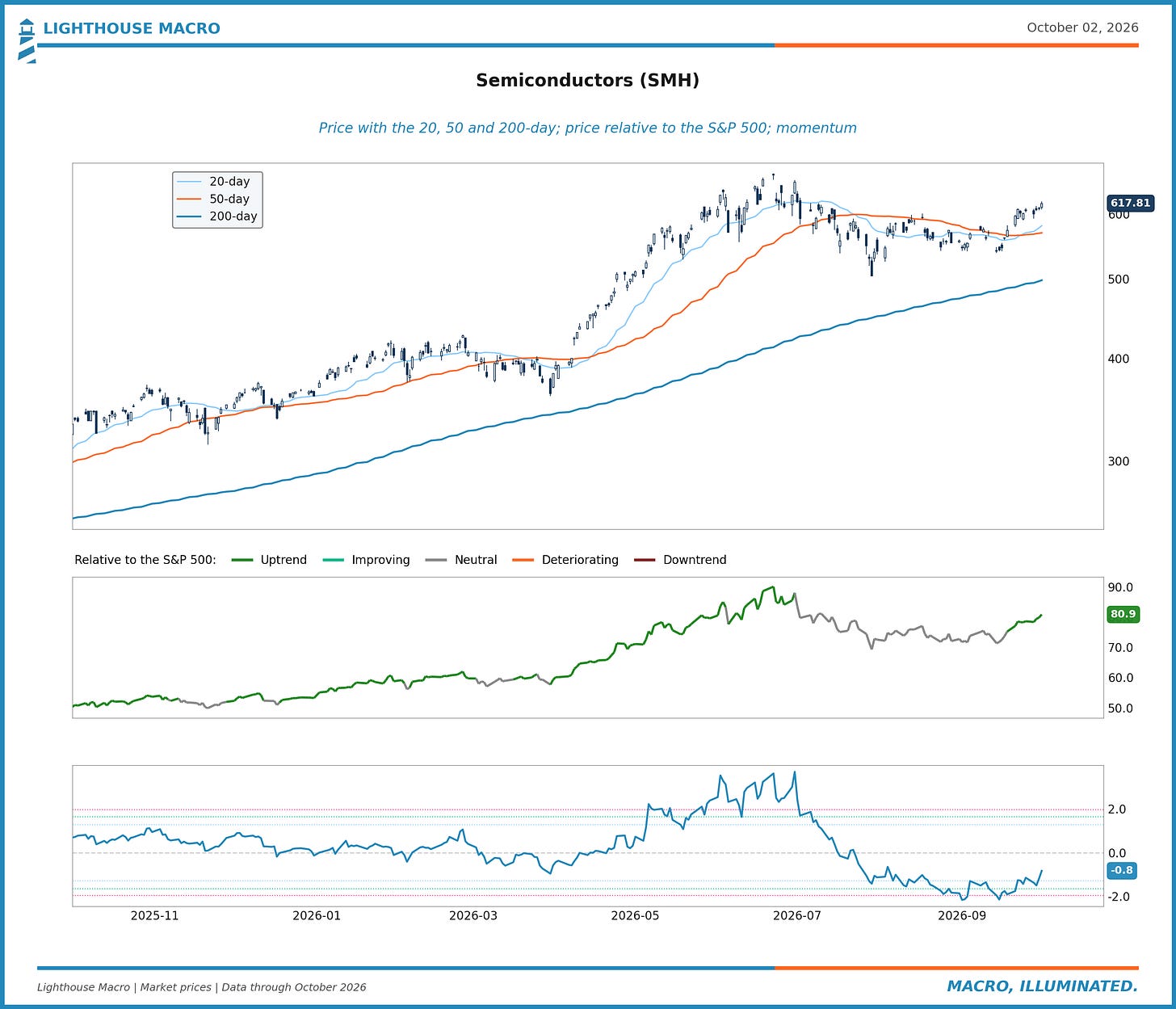
Figure 1: The semiconductor ETF, the book's longest-held name. Hollow candles with the 20, 50 and 200-day above, price relative to the S&P 500 in the middle, momentum below. Green is what leadership looks like.
Below the line: the seven positions, every stop, and what would trigger before next Friday.
The book
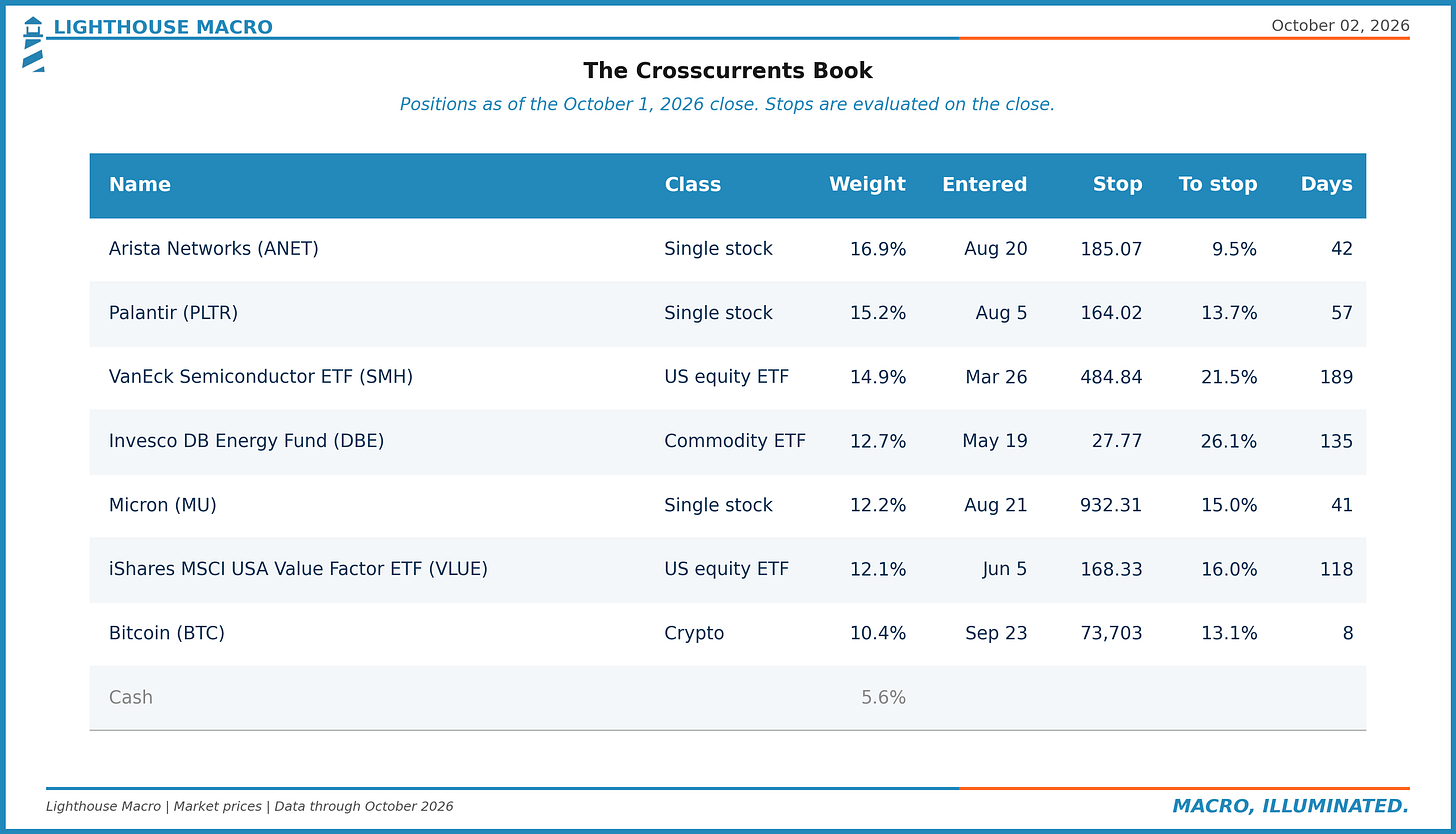
Figure 2: Crosscurrents positions as of the October 1 close. Seven of seven slots filled, 5.6% in cash.
Semiconductors, value and energy are the ETFs the rules hold, with bitcoin, the newest name, in its second week. Arista, Palantir and Micron are the allowance. The regime read is Goldilocks three months out, which puts the book 82% invested with 5.6% in cash.
Nothing entered and nothing left this week. The nearest stop is Arista's, 9.5% below the October 1 close. The farthest is energy's, about 26% below, which is what a position that has run since May earns under a trailing stop.
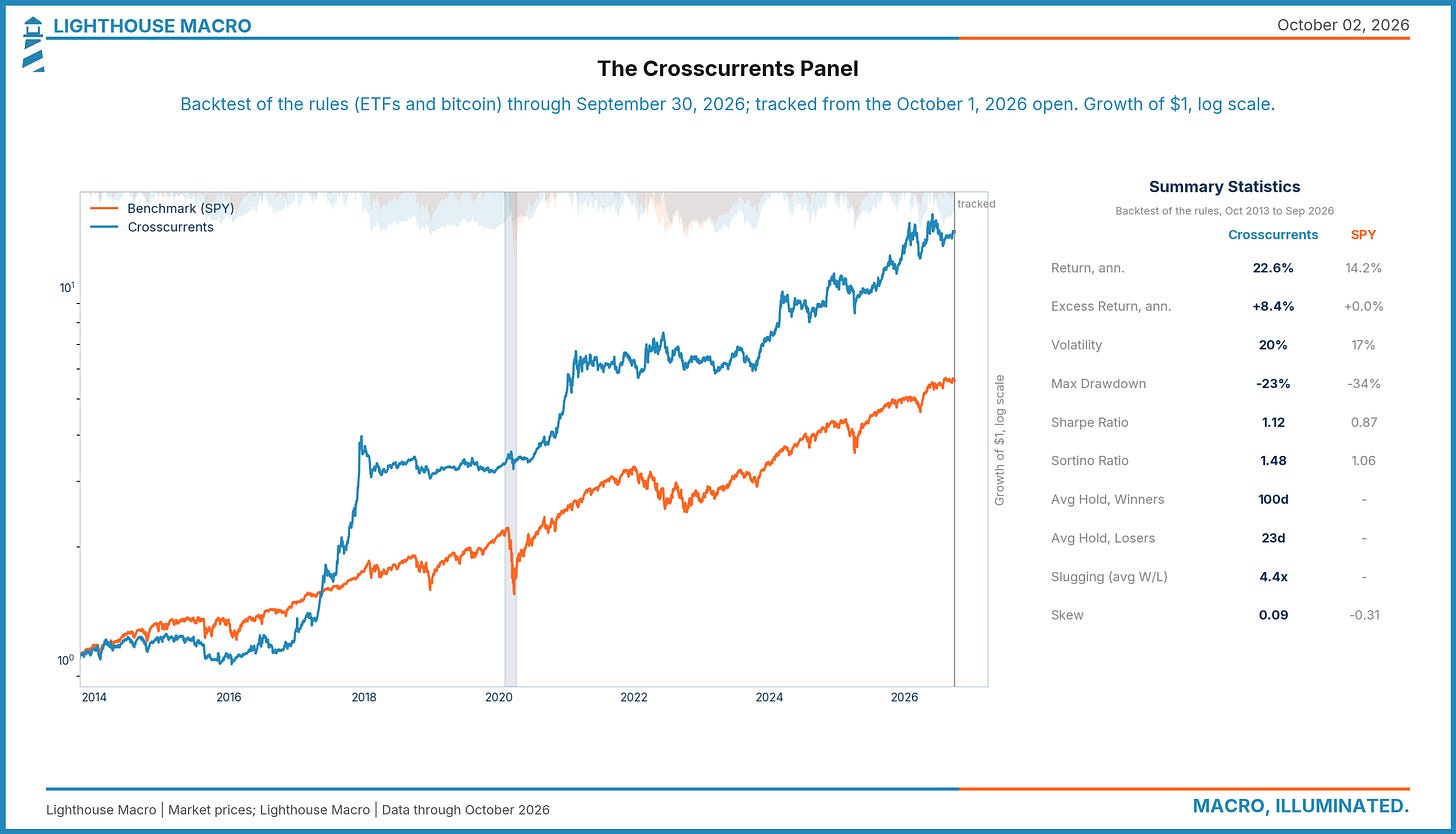
The Crosscurrents Panel: the backtest of the rules through September 30, and the tracked record from the October 1 open, against the S&P 500.
The rules have a record, and it is the reason we run them. From 2013 the backtest returns 22.6% a year against 14.2% for the index, and it gets there with a smaller hole: a maximum drawdown of 23% against 34%. In the Covid crash the index fell 34% and the rules fell 10%. Winners are held about 100 days and losers are cut in about 23, and the average winner is 4.4 times the size of the average loser.
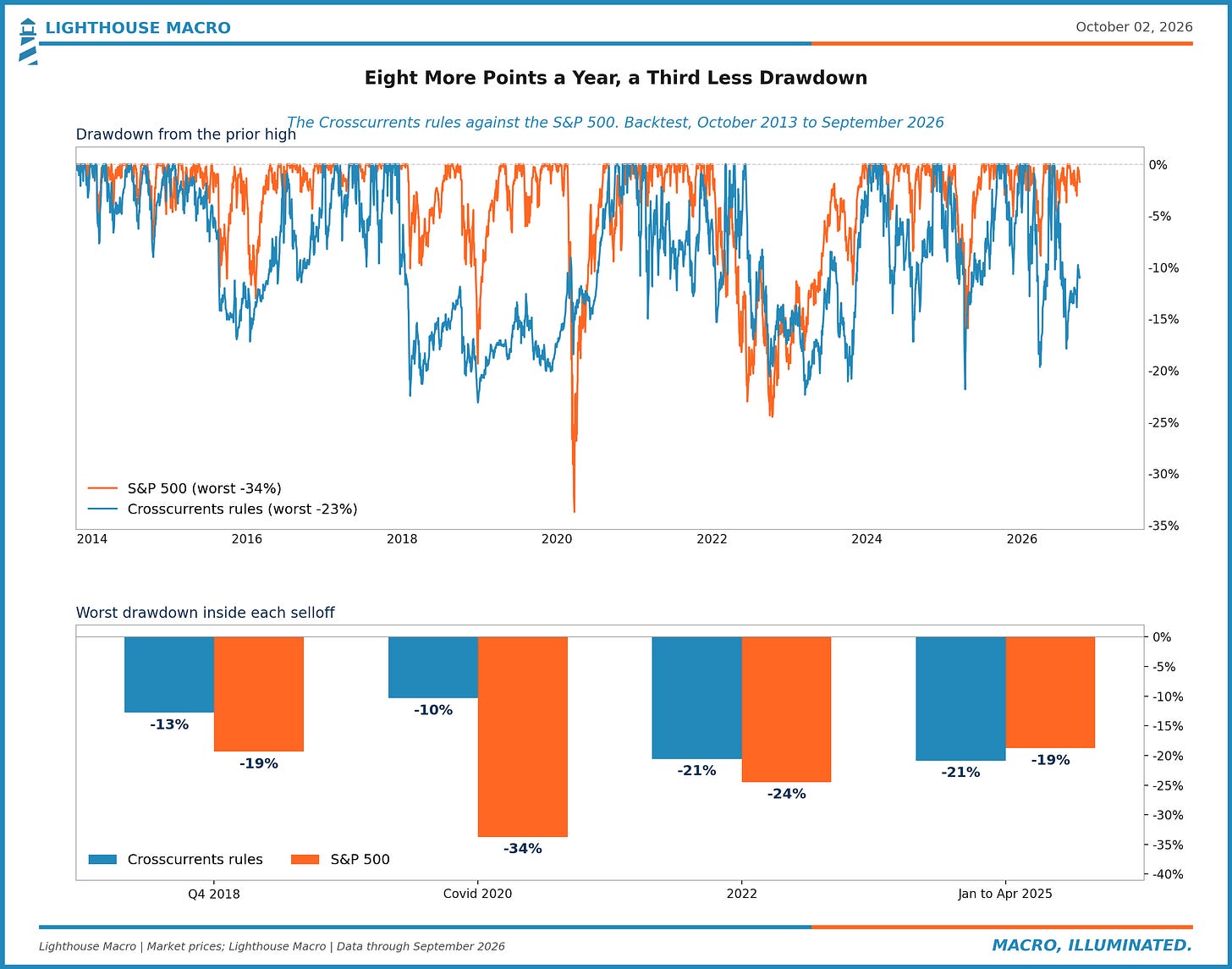
The Crosscurrents rules against the S&P 500: drawdown through the whole backtest, and the worst of each selloff.
That is the rules alone, trading ETFs and bitcoin. The allowance is judgment, so it is not in the backtest. The tracked record is the book as held, allowance included. It started Thursday at the open. Through the October 1 close the tracked record is one session old: the book +1.16%, the index -0.05%.
Where the exits sit
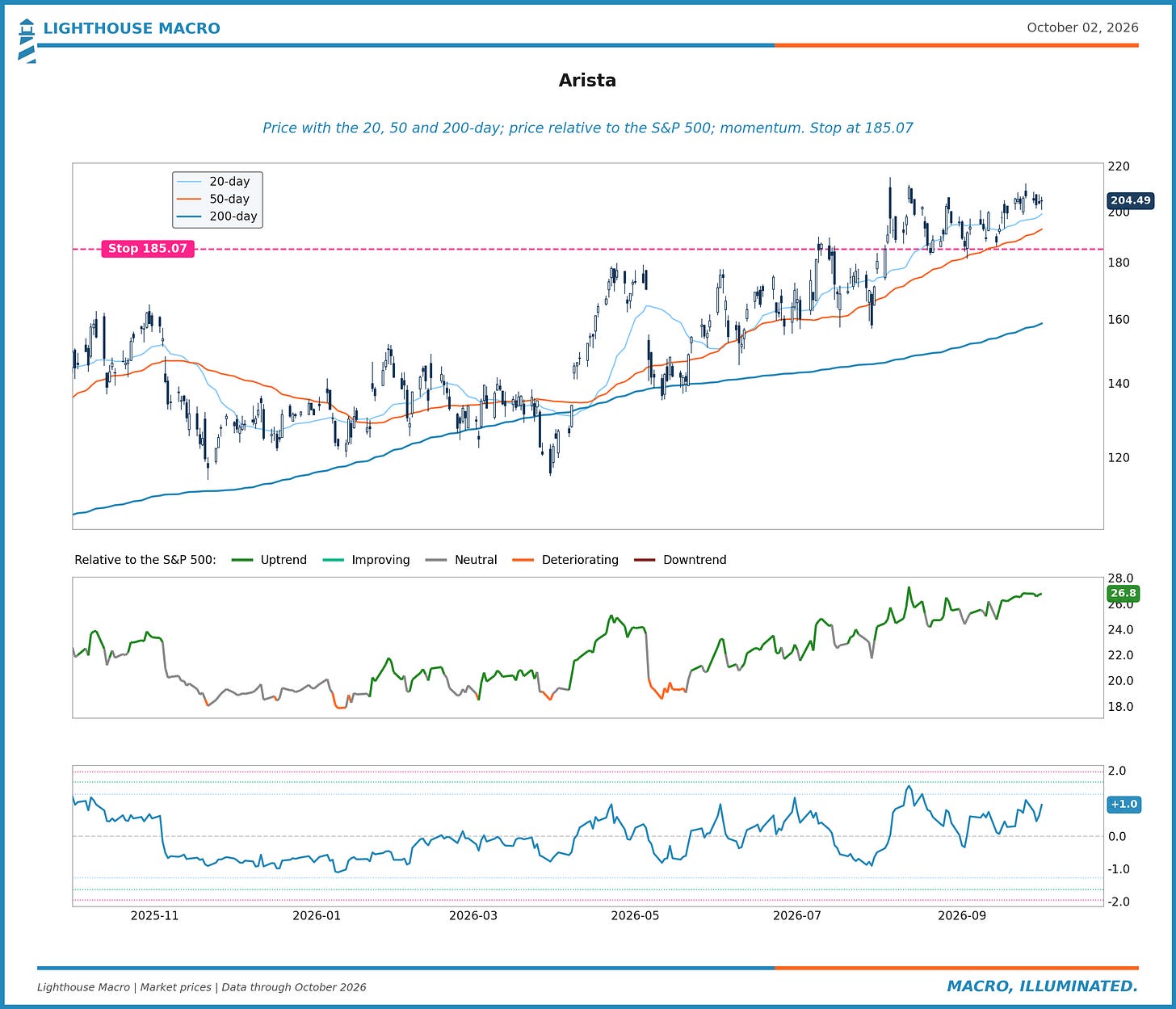
Figure 3: Arista. The nearest stop in the book, at 185.07.
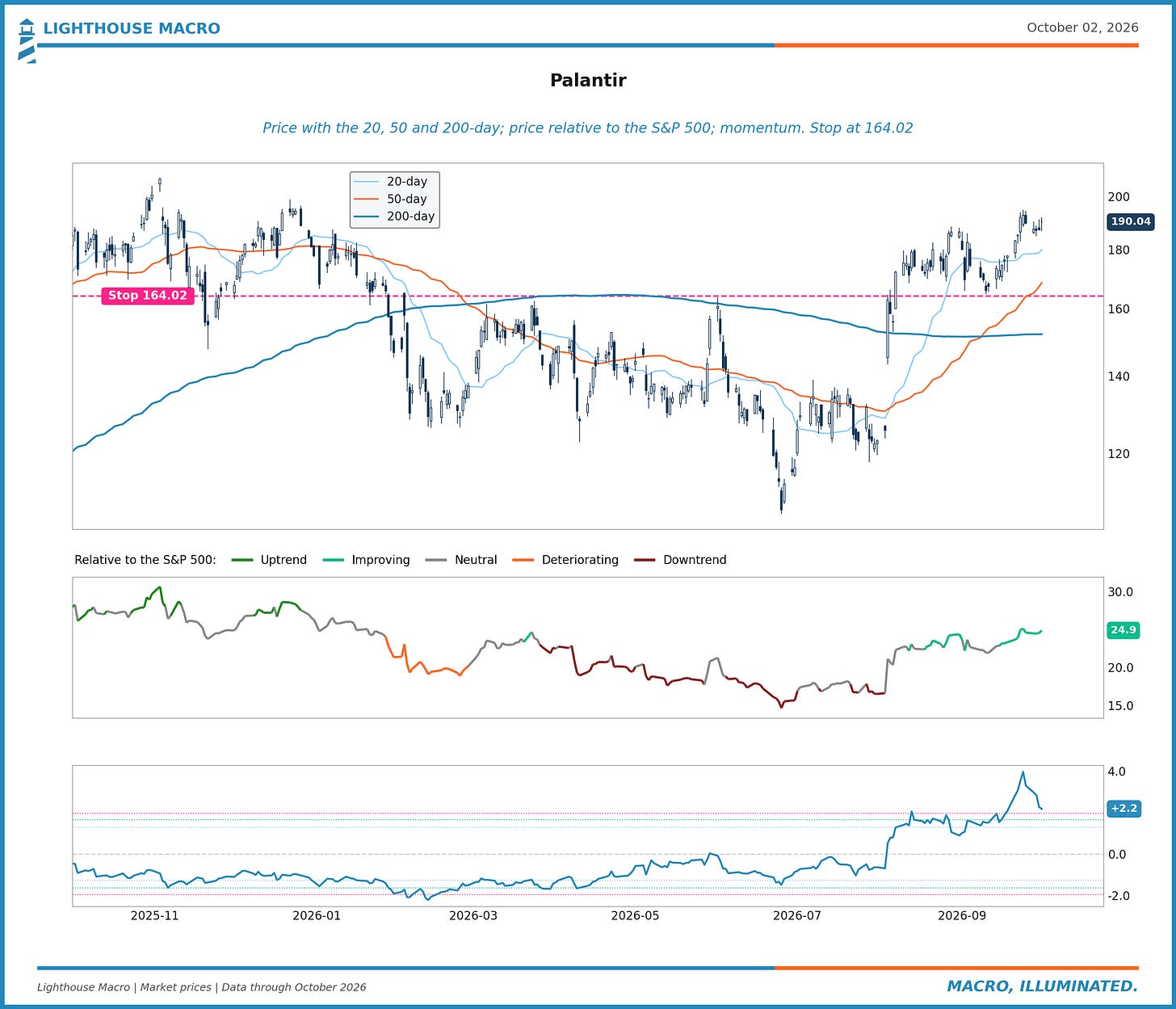
Figure 4: Palantir. Stop at 164.02. The relative line is teal, not green: it has cleared both of its relative averages, but the averages themselves have not crossed yet.
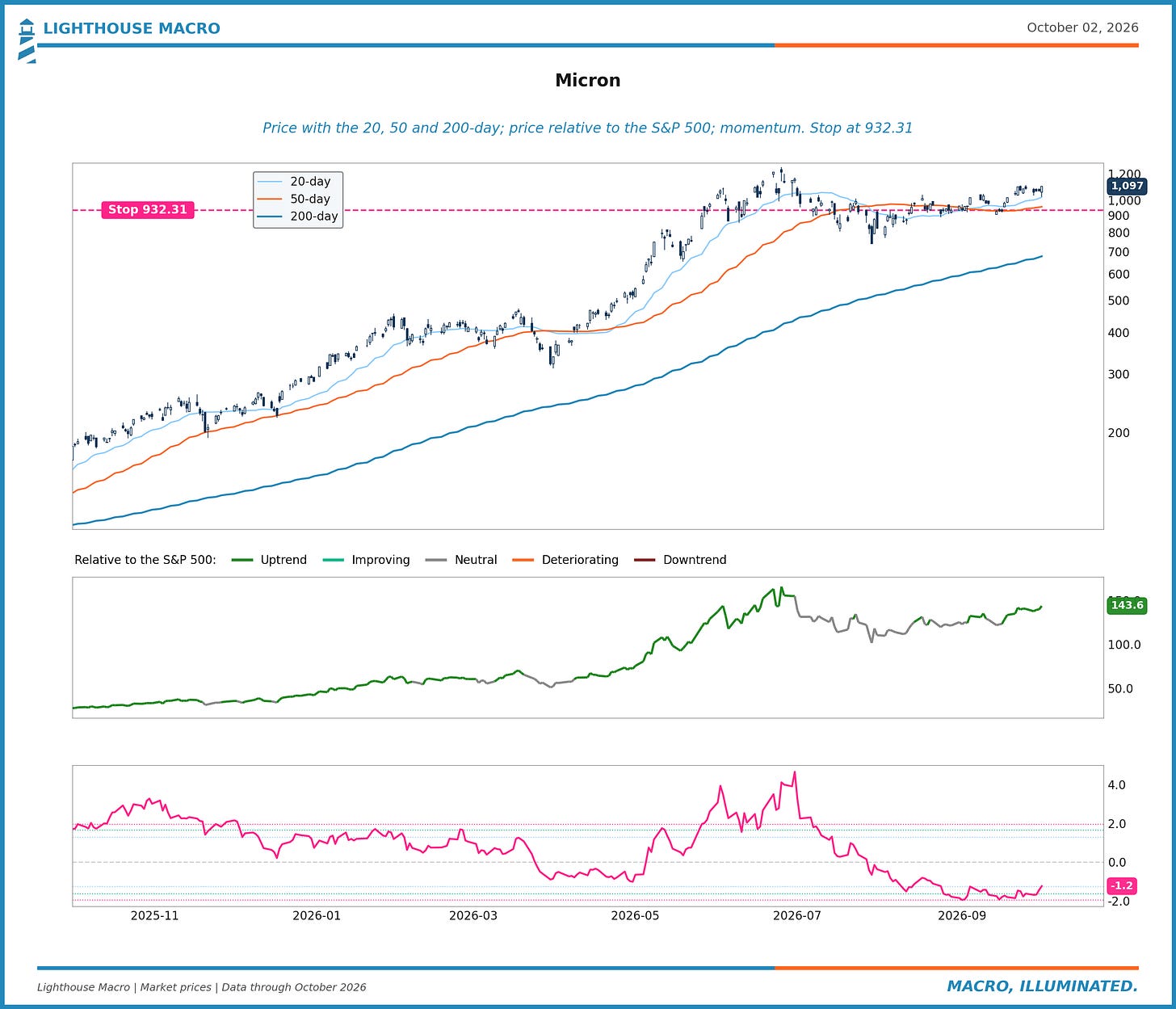
Figure 5: Micron. Stop at 932.31.
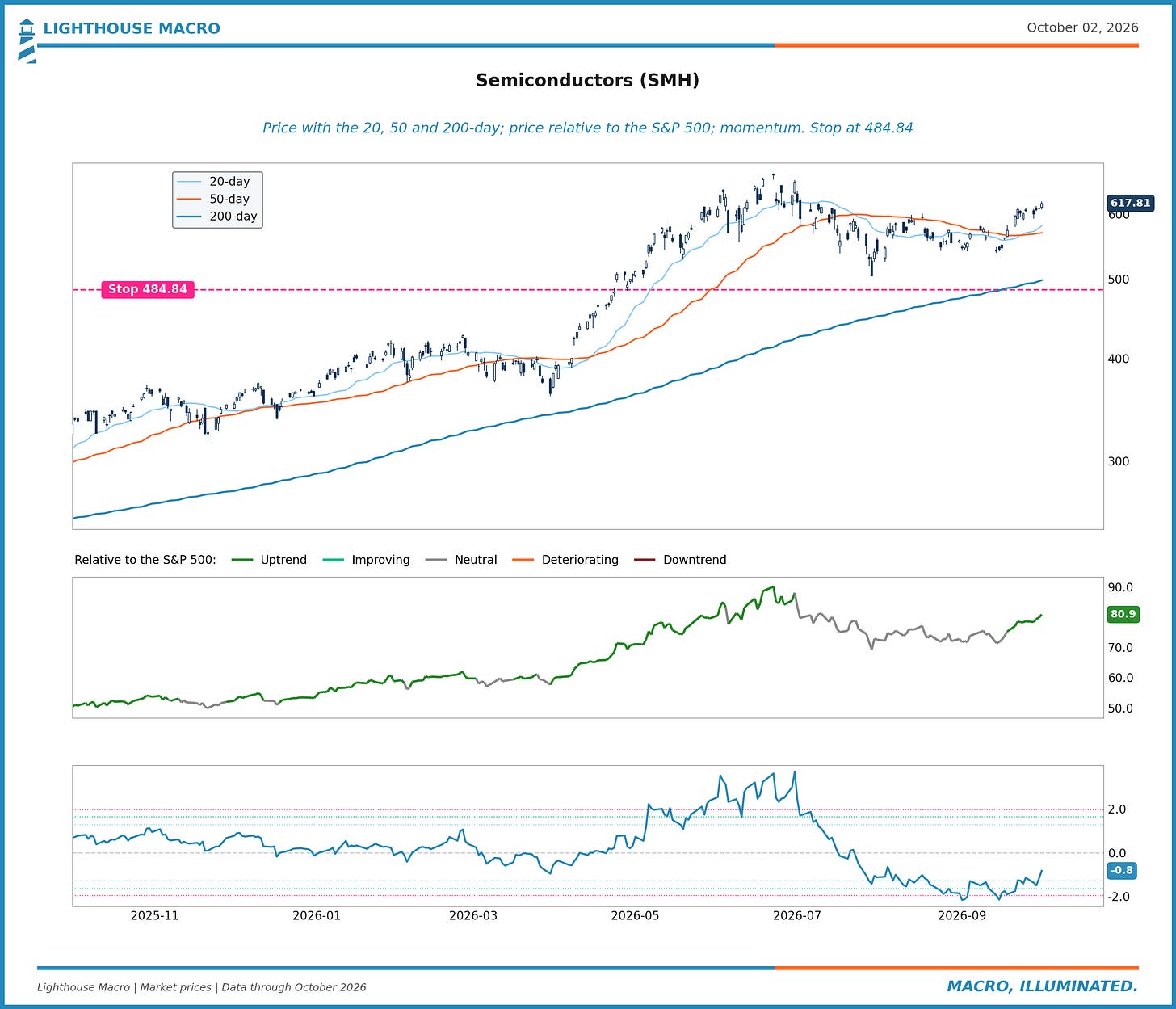
Figure 6: Semiconductors, with the stop at 484.84 and 189 days in the book.
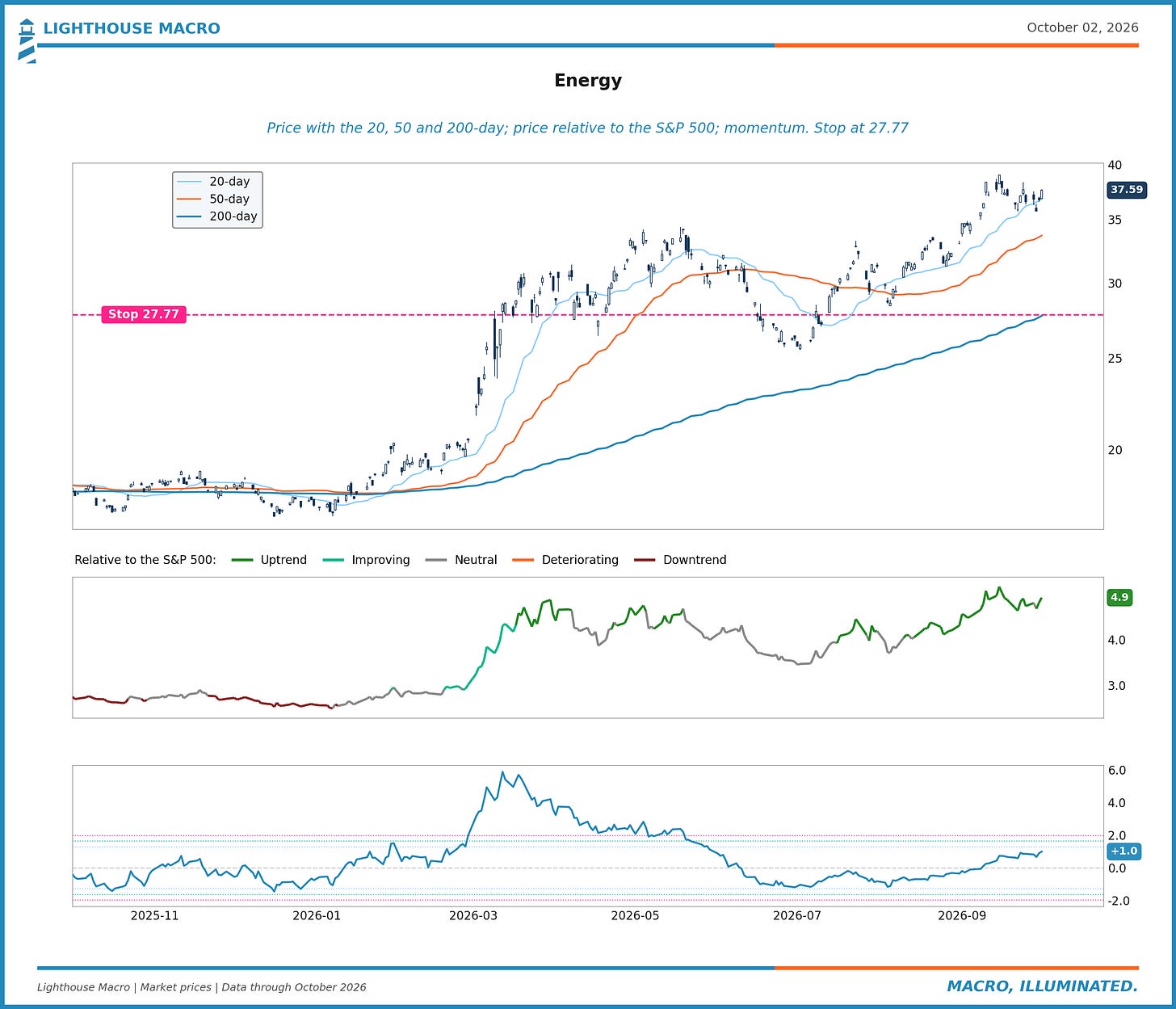
Figure 7: Energy. Stop at 27.77, the widest cushion in the book.
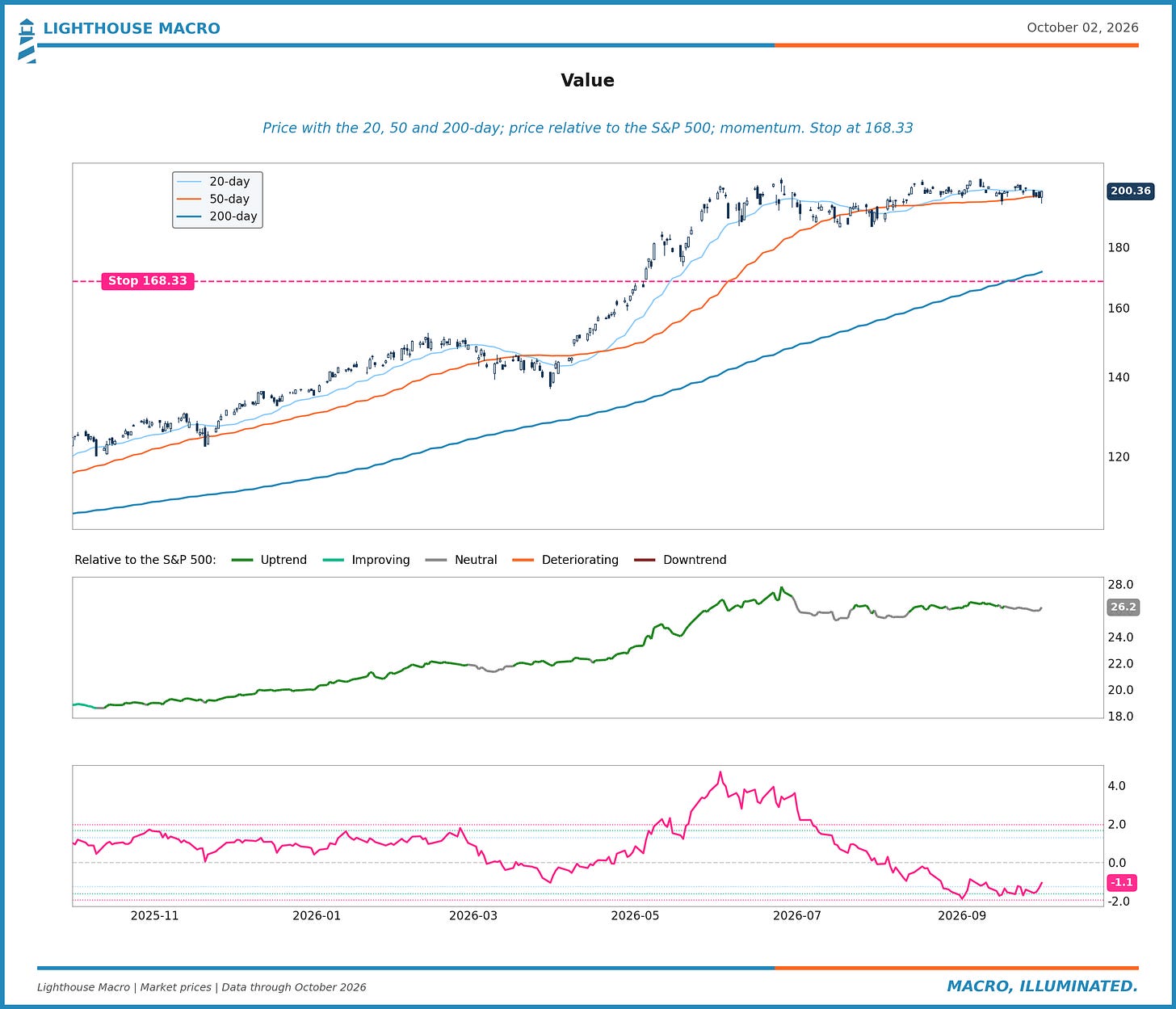
Figure 8: Value. Stop at 168.33. The relative line has slipped to gray: still above its longer relative averages, but under the 21-day, which is the first thing to go when a leader rests.
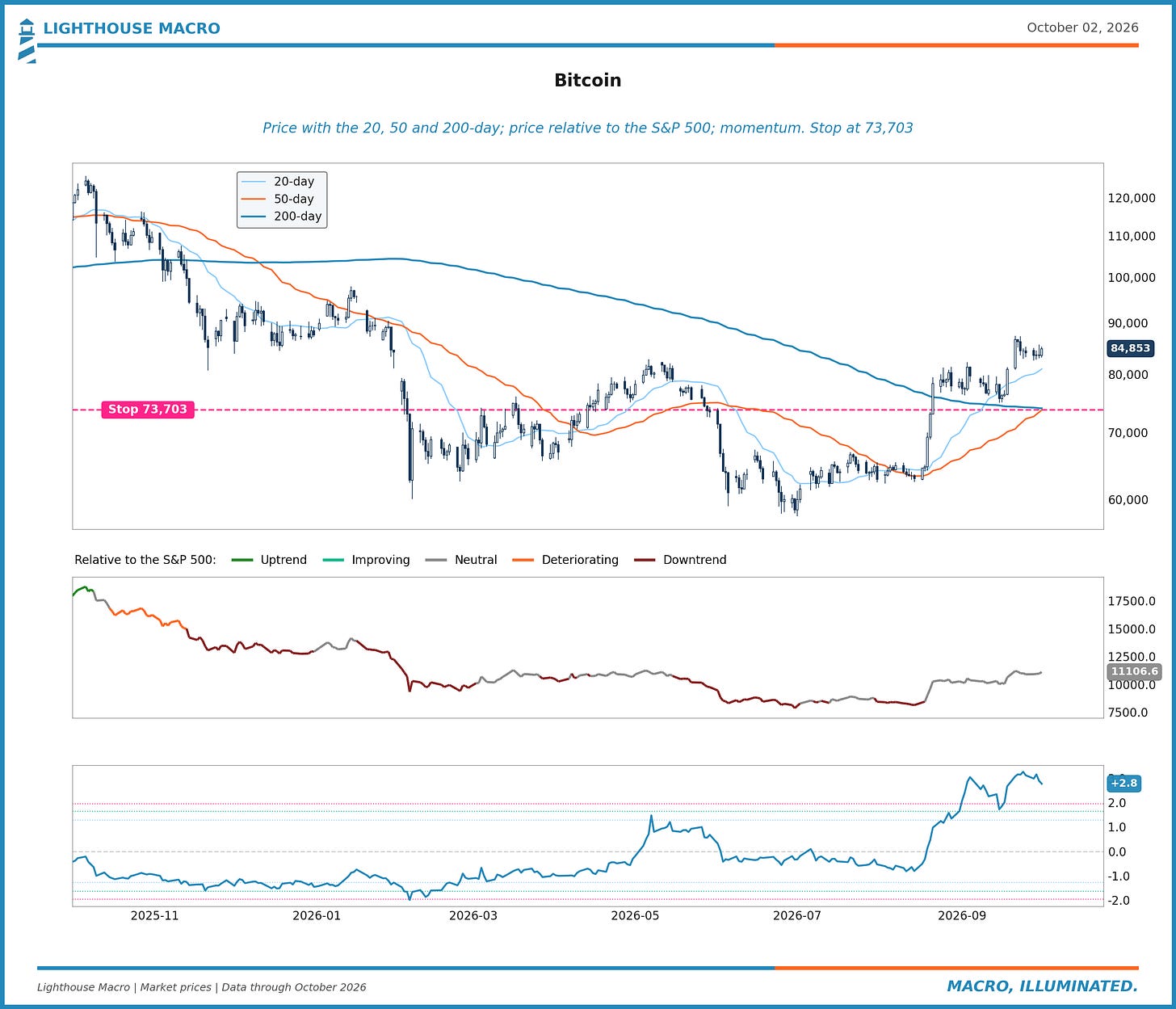
Figure 9: Bitcoin, sampled on equity sessions. Stop at 73,703. The relative line is gray: back above its 63-day, still under its 252-day.
What triggers before next Friday
A close below the stop on any name. The exit prints at the next open and a trade note goes out that day.
A slot opening, from a stop or from the regime budget moving. The top-ranked name through the gate fills it.
The Fed minutes on Wednesday and CPI the week after are context for the regime read, not inputs to the book. The regime sets the budget. Price sets everything else.
What would make us wrong
Not the labor data. If semiconductors and energy roll over against the index while the tape stays flat, the gate closes on new names and the stops handle the rest. That is the failure we built for. The one we did not build for is a gap through a stop, and the caps and the cash are there for exactly that.
Don't navigate in the dark. Join the Watch.